

How to Learn Spanish in One Year as an Adult (Step-by-Step Guide)
Learning a new language as an adult can feel challenging, especially when you’re balancing work, family, and other responsibilities. You may have studied Spanish in school, picked up a few phrases while traveling, or be starting from scratch. Adults often have specific reasons for learning Spanish, whether it’s communicating with Spanish-speaking colleagues, preparing for an international trip, connecting with Spanish-speaking friends, or developing a new personal skill. Having a clear purpose can help you stay motivated and make your learning experience more meaningful.
The best way for adults to learn Spanish is to choose an approach that fits their goals, schedule, and everyday needs. This means combining structured grammar lessons, practical vocabulary building, listening exercises, and regular conversation practice. Rather than memorizing isolated phrases, focus on understanding how the language works and applying what you learn in real situations. With consistent practice and appropriate guidance, you can gradually improve your ability to communicate in Spanish.
Why Learning Spanish as an Adult Can Feel Different
Learning Spanish as an adult comes with its own challenges. Work commitments, family responsibilities, and limited study time can make it difficult to maintain a regular learning schedule.
Another common challenge is the difference between understanding Spanish and speaking it. You might recognize familiar words when reading an article but struggle to form a complete sentence during a conversation. Grammar rules, verb conjugations, and pronunciation can also take time to understand.
However, adult learners have certain advantages. They can connect new vocabulary and grammar concepts to situations they already understand. They also tend to have clearer learning objectives.
For example, someone learning Spanish for professional communication may prioritize workplace vocabulary and formal expressions. Someone preparing for a vacation may focus on asking for directions, ordering food, and communicating with locals.
Identifying your reasons for learning helps you prioritize the skills that matter most instead of trying to master every aspect of Spanish at once.
Start Speaking Spanish Early
One of the most effective ways to develop your Spanish speaking skills is to start using the language from the beginning. You don’t need to understand every grammar rule or have an extensive vocabulary before attempting a conversation.
Start with simple sentences and gradually make them more detailed.
For example:
- Yo trabajo. – I work.
- Yo trabajo en Charleston. – I work in Charleston.
- Yo trabajo en Charleston y estudio español. – I work in Charleston and study Spanish.
These examples demonstrate how additional information can turn a basic statement into a more detailed sentence.
Once you become comfortable forming statements, practice asking questions and responding to them:
- ¿Cómo te llamas? – What is your name?
- ¿Dónde vives? – Where do you live?
- ¿Qué te gusta hacer? – What do you like to do?
You can practice these exchanges independently, with a language partner, or during a tutoring session.
The objective is to become comfortable expressing your own thoughts rather than relying entirely on memorized expressions. Speaking regularly also helps you identify gaps in your vocabulary, grammar, and pronunciation.
Build a Strong Foundation in Spanish Grammar and Vocabulary
Spanish grammar and vocabulary provide the foundation for understanding and constructing sentences. Learning how these elements work together makes it easier to communicate accurately.
One of the first grammar concepts to understand is verb conjugation. Spanish verbs change depending on the subject and tense.
Consider the verb hablar, which means “to speak.”
- Yo hablo – I speak.
- Tú hablas – You speak.
- Él habla – He speaks.
- Nosotros hablamos – We speak.
- Ellos hablan – They speak.
Understanding these changes helps you recognize who is performing an action and how to express it correctly.
Alongside grammar, build vocabulary around subjects that are relevant to your daily life:
- Work: Meetings, colleagues, schedules, and professional communication.
- Travel: Transportation, accommodation, directions, and common questions.
- Food: Ingredients, ordering meals, and discussing preferences.
- Family: Relationships, personal information, and everyday activities.
It is also important to understand how Spanish nouns and adjectives agree in gender and number. For example, libro rojo means red book, while casa roja means red house.
Learning these concepts in context makes grammar easier to understand and helps you apply new vocabulary more accurately.
Spanish Learning Apps vs. Real Conversation Practice
Language-learning apps provide a convenient way to study Spanish independently. They can help you review vocabulary, practice grammar, and become familiar with common expressions.
However, completing an exercise is different from participating in a conversation. Real communication requires you to understand what another person is saying, interpret the context, and respond appropriately.
Different learning methods support different language skills:
| Learning method | What it helps you practice |
| Language-learning apps | Vocabulary, basic grammar, and short exercises |
| Reading Spanish content | Sentence structure, vocabulary, and reading comprehension |
| Watching Spanish videos | Listening skills, pronunciation, and natural speech |
| Speaking with others | Conversation skills, sentence construction, and natural responses |
| Working with a tutor | Grammar explanations, corrections, and guided speaking practice |
You can also use Spanish-language videos, documentaries, podcasts, and news articles to become familiar with different speaking styles and expressions.
The Spanish Student Resources page offers additional learning tools, including dictionaries and Spanish-language media. You can also explore Videos en Español to practice listening and improve your understanding of spoken Spanish.
Combining independent learning resources with opportunities for conversation creates a more balanced learning experience.
How One-on-One Spanish Tutoring Helps You Learn
Independent study is useful, but it can be difficult to identify mistakes or understand complicated grammar concepts without guidance. One-on-one Spanish tutoring provides an opportunity to work through these challenges with individual instruction.
For example, a learner who struggles with verb conjugations may need additional grammar explanations and exercises. Someone who understands written Spanish but finds conversations difficult may benefit from guided speaking activities.
At Charleston Spanish Tutor, we offer Spanish tutoring for all ages and proficiency levels. Whether you’re an adult learning Spanish for personal or professional reasons, a student who needs help with Spanish classwork, or a beginner starting from scratch, our tutoring services can support your learning goals.
Our Spanish tutoring covers grammar, vocabulary, reading, writing, pronunciation, and speaking practice. Lessons can address individual learning needs and help students develop a better understanding of the language.
For adults, tutoring can focus on specific objectives, including:
- Communicating with Spanish-speaking customers or colleagues.
- Preparing for conversations during an upcoming trip.
- Refreshing Spanish skills learned in school.
- Improving pronunciation and listening comprehension.
- Developing stronger reading and writing abilities.
Charleston Spanish Tutor offers flexible tutoring options throughout Charleston, SC. This gives adult learners flexibility when arranging lessons around their professional and personal commitments.
5 Practical Tips to Improve Your Spanish
Building language skills takes time, but a few practical habits can make your learning experience more organized and productive.
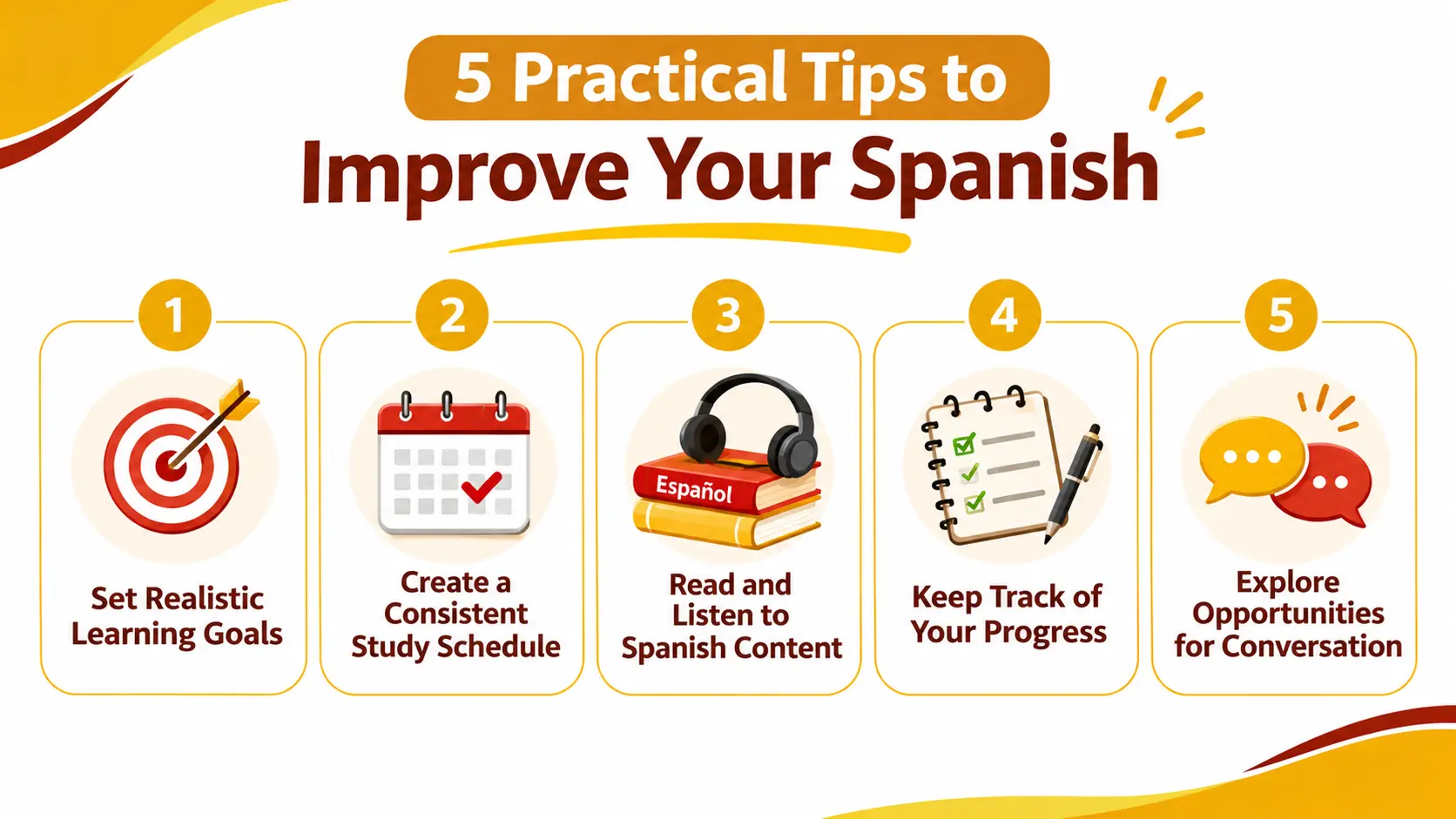 Here are five ways to improve your Spanish learning routine:
1. Set Realistic Learning Goals
Start by identifying what you want to accomplish. Your first goal might be introducing yourself, describing your daily routine, or understanding basic questions.
As your skills develop, you can work toward more advanced objectives, such as discussing professional topics or expressing opinions during conversations.
2. Create a Consistent Study Schedule
Choose a study routine that fits your availability. You could dedicate 15 to 20 minutes to Spanish on most days rather than trying to complete several hours of study in one sitting.
A short session might include reviewing vocabulary, reading a paragraph, or listening to a Spanish conversation.
3. Read and Listen to Spanish Content
Explore Spanish-language articles, short stories, podcasts, and videos. Choose materials that match your current proficiency level so you can understand the general meaning without becoming overwhelmed.
As you progress, introduce more challenging content to expand your vocabulary and improve comprehension.
4. Keep Track of Your Learning Progress
Maintain a notebook or digital document containing new vocabulary, grammar concepts, and corrections from previous exercises.
Reviewing these notes helps you recognize which concepts you have understood and which ones need further attention.
5. Explore Opportunities for Conversation
Look for opportunities to communicate in Spanish through language exchanges, conversation groups, or guided tutoring sessions.
Listening to different speakers and responding to questions can help you become more comfortable with natural conversations.
Start Learning Spanish with Charleston Spanish Tutor
Whether you’re learning Spanish for work, travel, or personal development, having the right guidance can make your learning experience more effective.
At Charleston Spanish Tutor, we offer Spanish tutoring for all ages and proficiency levels, serving students throughout Charleston, SC, with flexible learning options.
Whether you are a complete beginner or looking to strengthen your existing Spanish skills, our tutoring services can help you work toward your individual learning goals.
From understanding grammar concepts to improving pronunciation and developing conversational abilities, you can receive guidance across different areas of Spanish learning.
You don’t have to figure out every grammar rule or practice every conversation on your own. Having access to structured instruction and opportunities to ask questions can help make your learning experience more focused.
Ready to improve your Spanish skills? Contact Charleston Spanish Tutor to learn more about our tutoring services and get started.
Frequently Asked Questions
What is the best way for adults to learn Spanish?
The best approach combines grammar and vocabulary study with regular speaking, listening, reading, and writing practice. Start with basic sentence structures and gradually introduce more complex conversations. A structured learning routine and personalized instruction can also support your progress.
How can adults improve their Spanish speaking skills?
Practice speaking regularly by describing everyday activities, answering questions, and discussing familiar topics. Listening to Spanish speakers and receiving feedback on pronunciation and grammar can also help improve communication skills.
Are language-learning apps enough to become fluent in Spanish?
Apps are useful for practicing vocabulary and grammar, but they offer limited opportunities for spontaneous conversation. Combine app-based learning with reading, listening exercises, and speaking practice to develop a more complete understanding of Spanish.
Is private Spanish tutoring helpful for adult beginners?
Yes. Private Spanish tutoring can help beginners understand grammar, develop vocabulary, practice pronunciation, and learn sentence construction. Individual instruction also provides an opportunity to ask questions and receive feedback on specific learning difficulties.
Can you learn Spanish as an adult after 30 or 40?
Yes. Adults can learn Spanish at different stages of life. Previous language experience, study consistency, learning goals, and opportunities for practice all influence progress. Starting with manageable objectives can help make the learning process more achievable.
How often should adults practice Spanish?
Try to include Spanish in your routine several times a week, ideally through short and consistent study sessions. Combine vocabulary revision, grammar exercises, listening, and speaking activities according to your learning goals.
How can I practice Spanish if I don’t know anyone who speaks it?
You can practice independently by reading sentences aloud, recording yourself speaking, listening to Spanish-language content, and completing speaking exercises. Language exchanges and private tutoring can also provide opportunities to participate in conversations.
Related posts
